This proposed settlement concerns claims about repossession notices and related debt-collection practices involving Peoples Security Bank & Trust and Peoples Financial Services Corp. Eligible people who stay in the settlement do not need to submit a claim form for the automatic cash benefit. If you opt out, you will not receive a settlement payment but may keep the right to bring or continue your own related lawsuit.
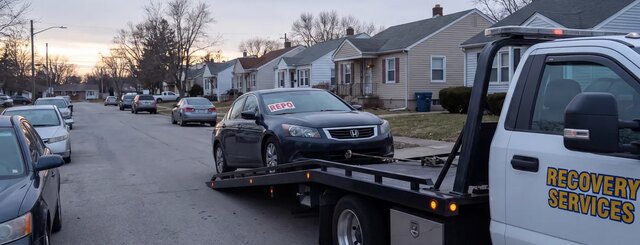
Benefit Summary
Eligible Class Members: Individuals, including Plaintiff but excluding Anthony Rakus, who during September 15, 2008 through November 7, 2017 financed a motor vehicle mainly for personal, family, or household use through a Defendant, or had a consumer loan or installment sales contract assigned to a Defendant; had a Pennsylvania address on the repossession date; had a vehicle repossessed by or at either Defendant’s direction as secured party; and either received a Notice of Repossession with specified missing information or received no such notice. A person must not exclude themselves from the settlement.
Eligible Class Members who remain in the settlement can receive an estimated pro rata cash payment of about $1,300 per Account. The final amount depends on the money left after approved fees, expenses, the representative award, and administration costs. Co-borrowers ordinarily split an Account payment equally unless they make a qualifying alternative-division request. Payment is made after final approval and any appeals are resolved.
Court-awarded attorneys’ fees and expenses, the representative’s incentive award, and settlement administration expenses are paid from the Settlement Fund before cash payments are divided. Payments are made after final approval and resolution of any appeals.
Available Awards
Estimated $1,300 pro rata per Account
Who Is Included
The settlement covers certain people with a Pennsylvania address whose vehicle was repossessed by or for Peoples Security Bank & Trust or Peoples Financial Services Corp. during the stated period, where the required repossession notice was missing specified information or no notice was sent. The full class definition has additional requirements, including how the vehicle was financed. Anthony Rakus is excluded.
- Proof required: No documentation is required for the automatic cash payment. For a payment request involving a deceased borrower, the requester must provide documentation showing an open estate and/or one or more people legally entitled to payment, and must personally sign the written request.
Claim and Payment Information
- Instructions: No claim form or other action is required for the automatic pro rata cash payment if the Court approves the settlement. Special written requests apply if co-borrowers want a different division of an Account payment or where a borrower has died.
Questions & Answers
Who is covered by this settlement?
Receiving this notice means the Defendants’ records identify you as a Class Member, but the class definition controls. People who did not receive a mailed notice may still be included.
- You may be included if, during the class period, you financed a vehicle mainly for personal, family, or household use through a Defendant, or your consumer loan or installment-sales contract was assigned to a Defendant.
- You also needed to have a Pennsylvania address when the vehicle was repossessed and have the vehicle repossessed by, or at the direction of, a Defendant as secured party.
- The notice requirement is also important: you must either have received a Notice of Repossession missing one or more listed details, or received no such notice.
- Anthony Rakus is excluded. The class period is September 15, 2008 through November 7, 2017.
How much could I receive, and why is the amount estimated?
This is a payment per Account, not necessarily a separate full payment for every borrower on a joint account.
- The settlement fund is $1,152,673.00.
- Money first pays settlement administration costs, Court-awarded attorneys’ fees and expenses, and any Court-awarded payment to the Class Representative.
- The remaining amount is divided equally by Account among Class Members who stay in the settlement. The notice estimates about $1,300 per Account, but that is not guaranteed.
Do I need to file a claim, and when would payment be sent?
The notice does not give a specific payment date.
- No claim form or other action is required to remain in the settlement and receive the applicable automatic pro rata payment.
- Do not opt out if you want to remain eligible for the settlement payment.
- Payments are not due simply because the hearing date passes. The Court must approve the settlement, and any appeals must be resolved first.
What happens if an Account has more than one borrower?
Requesting a different split is not an objection and does not remove either person from the settlement.
- The Account payment is normally split equally among co-borrowers.
- Co-borrowers who stay in the settlement may jointly request a different division. The request must be written, identify the case and the requesting Class Members and their addresses, be personally signed by both co-borrowers or their legal representatives, and explain their agreed division.
- Send the request by mail, fax, or email with a signed attachment to the Settlement Administrator by September 21, 2026.
What if the borrower or a co-borrower has died?
The notice says creditors, heirs, and representatives of deceased Class Members’ estates are responsible for obtaining their own lawyer if they decide one is needed.
- For a joint Account where one co-borrower has died, the payment generally goes to the surviving co-borrower unless the deceased person’s estate representative, executor, or administrator makes a qualifying written request.
- For an Account with one borrower who has died, no payment will be made unless an estate representative, executor, or administrator makes a qualifying written request.
- The request must be signed and supported by documentation showing an open estate and/or people legally entitled to the payment. It must be sent by September 21, 2026.
How do I opt out, and what rights do I give up if I stay?
If you do not opt out, you give up the right to sue the Defendants over claims relating to the subject Account as described in the Settlement Agreement.
- To leave the settlement, send a written exclusion request to the Settlement Administrator by mail, fax, or email with a signed attachment by September 21, 2026.
- The request must give the Class Member’s full name, current address, and telephone number; include the signatures of every borrower on the Account, or an authorized guardian, administrator, or executor; and say that the signers do not want to participate.
- A person who opts out receives no settlement benefits, but may pursue or continue their own related case. The notice cautions that a signed arbitration agreement may be raised by the Defendants in an individual case.
How can I object to the settlement?
A person who opts out cannot object because the settlement no longer affects that person.
- You may object only if you remain in the settlement. An objection does not remove you from it.
- Send a signed written objection to the Settlement Administrator by mail, fax, or email with a signed attachment by September 21, 2026. You must also mail it to the Clerk of Judicial Records, Civil Division, at Lackawanna County Government Center, 123 Wyoming Ave, First Floor, Scranton, PA 18503 by that date.
- The objection needs the case name and number, your contact information, a personal signature (or counsel’s signature if represented), specific reasons, and whether you intend to attend the final approval hearing.
Do I need to attend the Court hearing?
The Court will decide after the hearing whether to approve the proposed settlement. The notice does not say how long that decision will take.
- The hearing is scheduled for October 14, 2026, at 11:30 a.m., in Courtroom 3 at the Lackawanna County Courthouse, 200 N. Washington St., Scranton, PA 18503.
- You do not need to attend to receive settlement benefits. The Court will consider a timely written objection even if you do not attend.
- The hearing may be changed, including to an earlier date or remote format, without additional notice. The notice says people planning to attend should confirm the details in advance.
Does the notice mention taxes or bankruptcy?
Keep the notice for tax purposes.
- The notice says no IRS Form 1099-MISC or 1099-C will be issued in connection with this settlement.
- It still advises Class Members to promptly consult a tax professional because there may be a tax obligation.
- If the loan was discharged in bankruptcy or is part of a current bankruptcy case, the notice advises consulting a bankruptcy attorney and says there may be a duty to notify the bankruptcy trustee about the expected payment.
Am I excluded if I voluntarily surrendered, redeemed, or reinstated my vehicle loan?
- The notice says a person can still be a Class Member if they voluntarily surrendered the vehicle, redeemed it, or reinstated the loan, provided the other class requirements are met.
- It explains that the lawsuit challenges the content of repossession and post-sale notices rather than being based on actual harm.
Other Important Dates
- Exclusion deadline: 2026-09-21
- Objection deadline: 2026-09-21
- Final approval hearing: October 14, 2026 at 11:30 a.m.
- Hearing location: Courtroom 3 at the Lackawanna County Courthouse, 200 N. Washington St., Scranton, PA 18503
Case Details
- Total settlement fund: $1,152,673.00
- Case name: Steven Roses, individually and on behalf of all others similarly situated v. Peoples Security Bank & Trust Company and Peoples Financial Services Corp.
- Case number: 14-cv-5108
- Court: Court of Common Pleas of Lackawanna County, Pennsylvania
- Administrator: Class-Settlement.com
- Official Settlement Website: https://www.PennSecurityClassAction.com
Sources
Claim form, FAQ, deadlines, administrator information
Court-approved notice describing eligibility and benefits