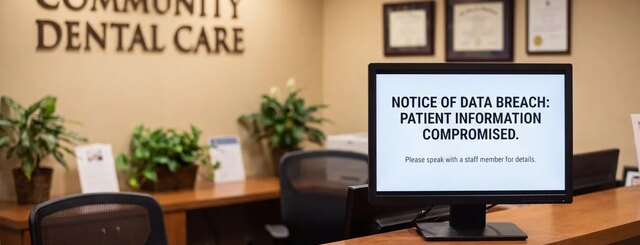
People whose personal or medical information was accessed in Community Dental Care's December 2024 data breach may claim two years of medical and credit monitoring plus a cash benefit. Claimants can choose either $50 without proof or reimbursement of up to $5,000 for documented losses.
The proposed settlement resolves allegations that an unauthorized actor accessed files containing private information. Community Dental Care denies violating the law or harming anyone, and the court has not decided which side is right. Claims must be submitted online or postmarked by October 19, 2026.
Who may qualify for Community Dental Care benefits?
The class covers people whose personal information was accessed without authorization in the breach, including everyone who received a breach notice. The affected files may have contained names, dates of birth, health-insurance information, medical information and Social Security numbers.
Community Dental Care and its officers, directors and related companies are excluded, as are government entities, the assigned judge and the judge's family or staff, and anyone who perpetrated the incident.
Receiving a notice is useful evidence that Community Dental Care identified someone as potentially included, but eligibility remains controlled by the class definition and settlement terms.
Monitoring is available with either cash option
Eligible class members may enroll in two years of the settlement's medical and credit monitoring service. It includes $1 million in medical identity-theft insurance, monitoring for exposure of health-insurance IDs and medical-record numbers, alerts concerning unauthorized Health Savings Account spending, and access to fraud-resolution help.
Enrollment codes were sent by postcard. Someone who no longer has a code can contact the settlement administrator. The monitoring benefit can be combined with either cash choice; it is not an alternative to cash.
The $50 and $5,000 payments cannot be combined
Claimants who do not seek documented-loss reimbursement may request a one-time $50 alternative cash payment. The notice says no proof or explanation is required for that choice, although a complete and timely claim form is still necessary.
The other choice reimburses up to $5,000 in actual, unreimbursed out-of-pocket losses caused by the breach. Examples include identity-theft or fraud losses, fees for credit reports or monitoring, credit-freeze costs, replacement identification and postage used to contact banks.
The two cash options are mutually exclusive. A claimant cannot receive the $50 alternative in addition to documented-loss reimbursement. The notice also excludes lost time and other nonmonetary losses from the $5,000 benefit.
Expense claims need outside documentation
The claimed expense must have occurred from December 20, 2024, through October 19, 2026, and must not already have been reimbursed by another source. Bank statements, receipts or similar records should show what was spent or lost, when it happened and how it relates to the breach.
A claimant may add a personal note to explain other evidence, but a self-prepared note alone is not enough. That distinction makes the no-proof $50 option simpler, while the documented-loss option is potentially much larger for people with qualifying records.
How to submit a claim
Claims can be filed online through the official settlement website or sent by mail. Online forms are due October 19, 2026; mailed forms, including required supporting records, must be completed, signed and postmarked by the same date.
Doing nothing produces no monitoring or cash, but a person who remains in the class will still be bound by the settlement release if it becomes final. Requests for exclusion and objections are due September 24, 2026.
The District Court for Ramsey County, Minnesota, has scheduled a final approval hearing for November 23, 2026, at 11 a.m. Central via Zoom. Benefits will be distributed only after the court approves the settlement and any appeals are resolved.
The settlement does not decide the breach allegations
The lawsuit alleges that a targeted cyberattack exposed files containing private information. Community Dental Care denies the allegations, denies that it violated any law or harmed anyone, and has not admitted that the case should proceed as a class action.
The proposed agreement is a compromise rather than a finding of liability. Class counsel plans to seek $400,000 in attorneys' fees and litigation costs, an amount the notice says Community Dental Care will pay. The court will review the settlement and requested fees before deciding whether to grant final approval.